Marketing Mix Modeling Makes a Comeback
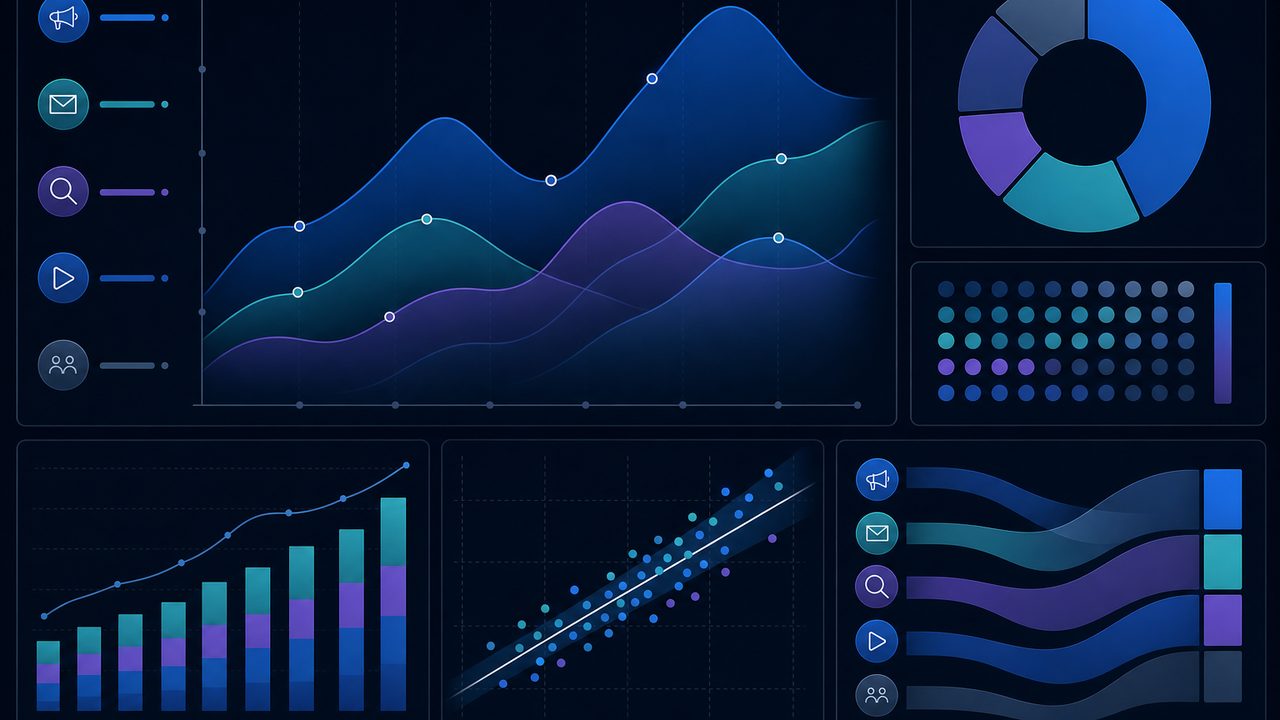
As pixel-based attribution weakens, marketing mix modeling is back to measure true incremental impact. A modern, accessible guide to MMM for performance teams.
Marketing mix modeling, once the domain of large enterprises with deep analytics teams, is experiencing a powerful comeback. As pixel-based, user-level attribution erodes under privacy restrictions and signal loss, marketers need a measurement approach that doesn't depend on tracking individuals. Marketing mix modeling fills that gap.
At its core, MMM uses statistical analysis to estimate how different marketing channels — paid search, social, video, offline, even promotions and seasonality — contribute to business outcomes like revenue or leads. Instead of following one user's clicks, it looks at aggregate spend and results over time to reveal what actually drives growth.
The modern version is far more accessible than the quarterly enterprise models of the past. Lightweight, open frameworks and cloud tools let mid-sized teams build models that refresh frequently and inform near-term decisions. You no longer need a dedicated econometrics department to get directional answers about channel effectiveness.
The biggest advantage is incrementality. MMM helps answer the question every CMO asks: what would have happened anyway? By estimating baseline demand versus marketing-driven lift, it stops teams from over-crediting channels that simply harvest existing intent. This protects budget from being wasted on activity that looks good in platform dashboards but adds little real value.
MMM works best alongside, not instead of, other methods. Pair it with incrementality experiments and clean first-party data to triangulate the truth. Use platform attribution for in-flight optimization, experiments to validate causality, and MMM for strategic budget allocation across the whole mix.
For performance teams under pressure to justify every dollar in a privacy-first world, marketing mix modeling offers a durable, future-proof way to measure what matters. Its comeback is not nostalgia — it is a rational response to a measurement landscape that has fundamentally changed.
Read the full interactive version →